



James Hardie Siding Installation in Chicago: Built for Freeze-Thaw Winters

Trusted roofing and siding contractor serving Chicagoland since 2007. Fiber cement that holds its shape when the thermometer swings 30 degrees overnight.

Better Business Bureau accredited business
Featured by Forbes Home
CertainTeed ShingleMaster PREMIER certified roofing contractor
CertainTeed SidingMaster PRO certified siding contractor

See If My Roof Has Storm Damage

Free storm damage inspection or a no-pressure quote for your project

4.9 out of 5 293 Google reviews
Request an appointment
Storm & Age Damage

Spotting Storm and Age-Related Siding Damage

Quick Summary

Cracked, warped, or chalky siding usually points to either storm impact or simple age. Knowing which one you’re dealing with matters, because it changes whether insurance will cover the repair.

Damage does not always show up right after a storm. Sometimes it takes weeks. A hairline crack from hail can sit there quietly until a hard freeze splits it wide open.

So how do you know if what you are looking at is storm damage or just wear and tear? Usually it is a mix of both. Age weakens the material, then one storm finishes the job. Here is what we look for on an inspection:

Cracks or splits near the bottom edge

Run your eye along the lower edge of each plank. That is where a hairline hail crack quietly opens up after the first hard freeze.

Chipped or dented spots

Especially after a hailstorm, and especially clustered on the storm-facing walls. That pattern reads as impact, not age.

Bowed or separated panels

Boards that look slightly bowed or have pulled away from the wall are already letting water in behind the siding.

Chalky white residue

Rub a hand across the surface. If it comes away chalky, that is UV breakdown and age rather than storm damage.

Soft, dark, or crumbly spots

Near the ground or window trim. Soft or crumbling material means moisture has already found its way into the wall.

What we see every spring in Naperville and Bolingbrook

We get calls every spring from folks out in Naperville and Bolingbrook after a hard hail season rolls through. Both areas sit right in the path of some of the region’s roughest spring storm cells.

A homeowner will notice a few dented panels near the garage and figure it is cosmetic. It usually is not.

Do not wait for it to look worse

Once water gets behind cracked siding, it does not stop at the surface. It works into the sheathing and the framing, and by the time you can see it from inside, the repair is a much bigger job.

Getting an inspection soon after a storm also makes insurance documentation far easier.

Repair or Replace

When Siding Repair Solves the Problem Instead of Full Replacement

Quick Summary

Not every damaged board means a full replacement. If the damage is limited to one or two planks and the wall behind them is dry, swapping the boards is usually the right call.

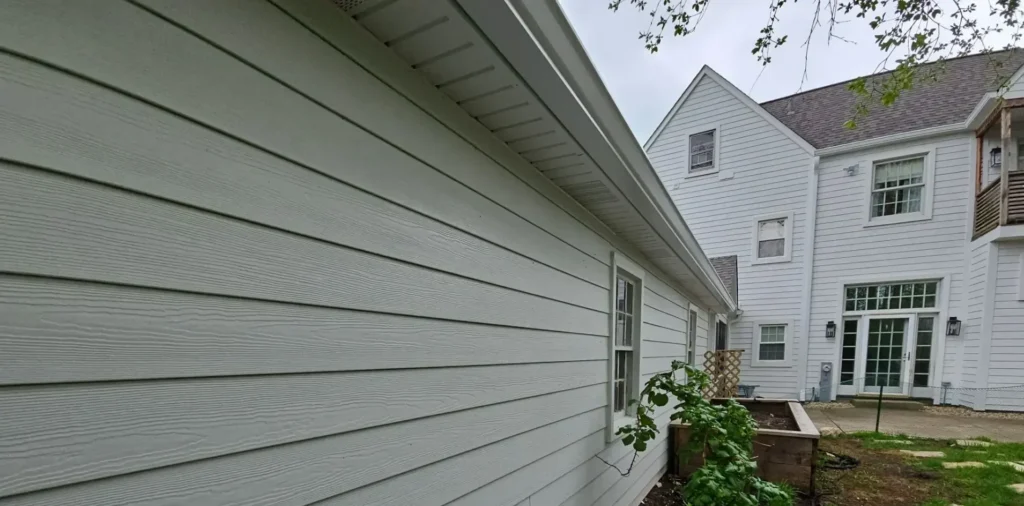
Here is something we tell people all the time. James Hardie planks are tough, but a stray ladder, a wayward branch, or a hail impact can crack one or two boards without touching the rest of the wall. If that is what you are looking at, repair usually gets the job done.

We see this a lot in Naperville and Downers Grove. Older homes with a few damaged planks near a downspout or corner trim, right where water tends to sit. If the panel underneath is dry and the framing has not taken on moisture, swapping out a plank or two is a reasonable fix.

The damage is contained

One or two boards, not scattered across the wall or wrapping around multiple elevations.

The sheathing behind it is dry

No soft spots, staining, or rot on the sheathing behind the siding when we pull a plank.

The siding is still fairly new

A replacement plank can match the existing color closely instead of standing out against sun-worn boards.

The issue is cosmetic

A small crack or dent on the surface, not a structural problem working its way into the wall.

When repair stops making sense

If the damage is scattered across multiple walls, or the siding is older and faded, repair gets tricky fast.

Patching a bright new board in next to sun-worn siding looks obvious. At that point a full replacement is usually the better value.

Check the rest of the house too

If hail hit hard enough to crack Hardie board in several spots, there is a decent chance the house took damage in other areas too. Roof, gutters, trim.

That is a different conversation, and one worth having before you file anything.

Thinking about James Hardie siding installation? Let's talk.

Get a free quote and a written property report. Horizon Restoration is ready to help — no pressure, no obligation.

The Process

The James Hardie Installation Process, Step by Step

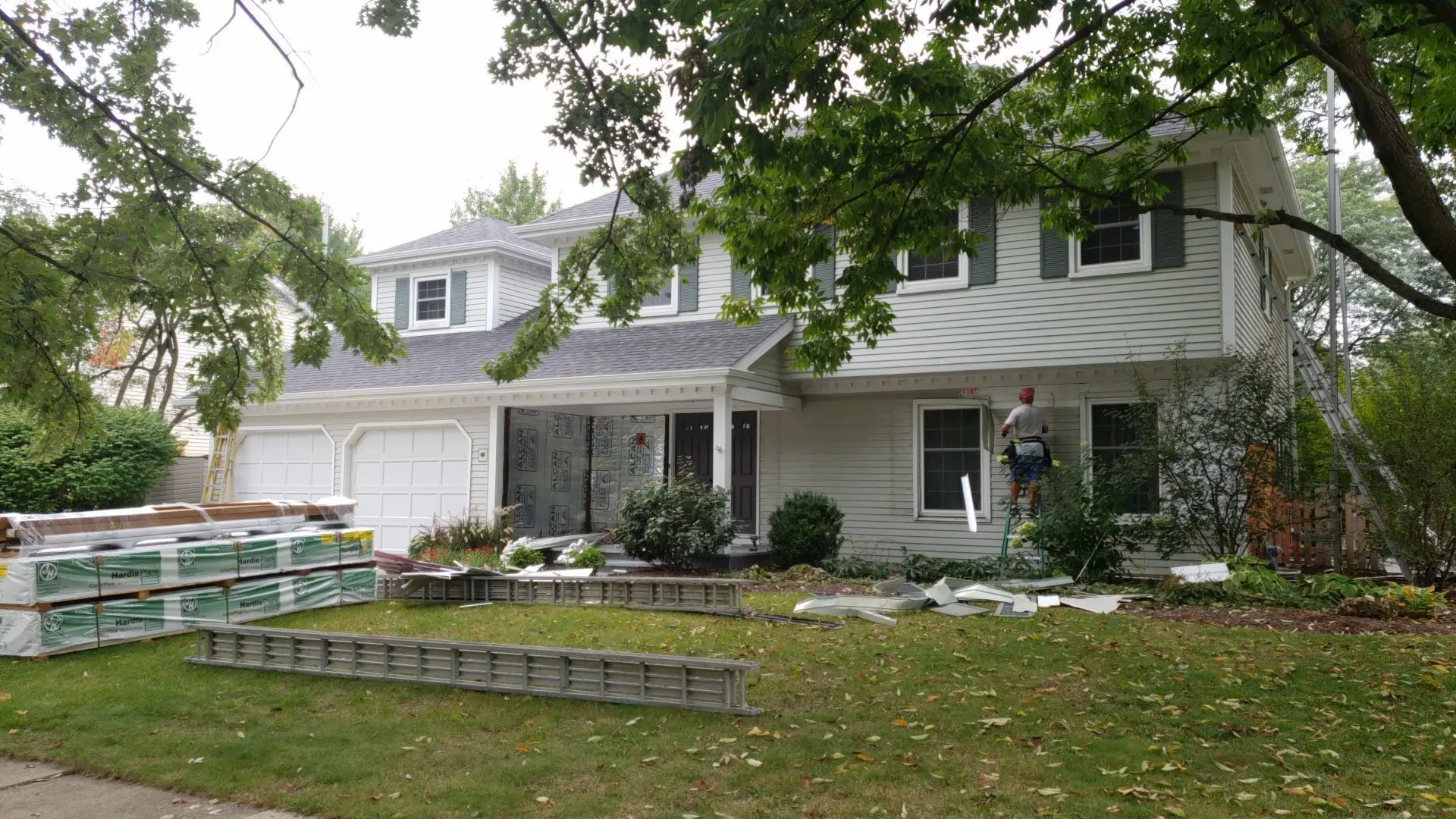
Once you decide to move forward, the job follows a pretty set order. We have done this enough times to know that skipping a step just causes problems later, so we do not skip steps.

Measure and check the substrate

If there is rot or soft spots under the old siding, we find it now, not after the new boards are up.

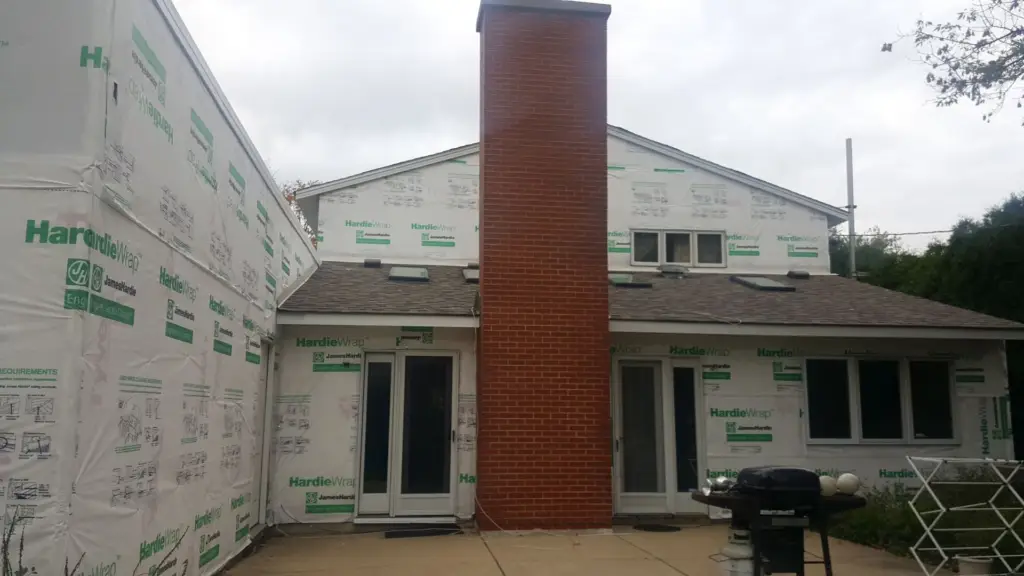
Install the weather resistant barrier

This layer keeps moisture out and gives the James Hardie boards a stable surface to attach to.

Set starter strips and flashing

Around windows, doors, and corners. Flashing mistakes here are the number one cause of leaks down the road.

Hang the fiber cement panels

Using James Hardie's fastening specs, spaced exactly the way the manufacturer requires for expansion and contraction.

Cut and fit the trim

Trim, corner posts, and J-channel around every single opening on the house.

Caulk and prime every cut edge

Raw fiber cement needs to be sealed. Any edge we cut on site gets caulked and primed before we move on.

Final walk through with you

We check seams, paint lines, and fastener patterns together before we call the job done.

Timing & Delays

How long it actually takes

A typical single-family home in the Chicago suburbs takes a few days. Sometimes longer if there is extensive trim work or the old siding needs a full tear off.

Weather plays a role too. Cold snaps can slow caulk cure time, so we watch the forecast closely on fall and winter jobs.

The delays we run into come from hidden water damage found once the old siding comes off, not from the James Hardie material itself. We keep the job site clean as we go, and you will always know what stage we are on. No guessing, no surprise change orders halfway through.

Certified Installation

How to Verify Certified Installation and Avoid Common Mistakes

Here is something we see too often. A homeowner hires someone who says they “install Hardie siding all the time.” However, they have never gone through manufacturer training. The boards look fine for a year, then the caulk lines crack and moisture gets behind the panels. By then the damage is done.

Ask for proof, not promises. A real certified crew can show you documentation, not just tell you they are certified. Our team is certified by James Hardie directly, along with CertainTeed, GAF, LP SmartSide and other manufacturers — including the specific nailing patterns and clearances each product requires.

These are the five install mistakes we find most often when we open up someone else’s work:

01

Fastener spacing that does not match the install guide

Every James Hardie product has a published nailing pattern. Off-spec spacing looks fine on day one, then shows up as loose boards and split caulk lines a few seasons in.

02

Panels butted tight with no gap for expansion

Fiber cement is stable, but it still needs its clearances. Butt the boards tight and every seasonal movement telegraphs straight through the joints.

03

Caulk used instead of proper flashing at trim joints

Caulk is not flashing. Where a trim joint should have metal behind it, a bead of sealant buys you a season or two before water finds its way in.

04

Bottom edge installed too close to grade or the roofline

Hardie board needs clearance from grade, roofing, and decking. Set it too low and the board wicks water up from the ground all winter.

05

No house wrap or weather barrier underneath

The barrier is what keeps wind-driven rain out of the sheathing. Skipping it is invisible on day one and expensive by year three.

Why these mistakes cost so much later

Any one of those mistakes can cause rot, warping, or moisture intrusion within a few seasons. Once it is covered up behind paint and trim, you will not see it coming.

Before you sign with anyone, ask them to walk you through their install plan. If they cannot explain clearance gaps or fastener depth off the top of their head, that is a red flag. We offer a free inspection and property report so you can see exactly what your home needs before any work starts. No guessing involved.

Good installation is not flashy work. It is boring, careful, repetitive work done right every time.

Why Horizon Restoration

We pass our own checklist.

2,300+
Projects
4.9 ★
Google rating
2007
Established

No pressure, no obligation. Just a straight answer on what your siding actually needs.

Compare Your Siding Options

James Hardie & Fiber Cement

You’re on the James Hardie page. Fiber cement is the premier material for withstanding Chicago’s climate. It holds its shape through freeze-thaw swings, won’t rot or swell at a wet seam, and keeps its paint for years.

Vinyl Siding

Vinyl is the most frequently installed siding type on Chicago homes — lightweight, low maintenance, and the lowest upfront cost. It does get brittle after enough winters, so panel gauge and install technique matter.

LP SmartSide

LP SmartSide is an engineered wood siding offering the appearance of real wood without the maintenance. Formulated to resist rot, termites, and fungal decay, it performs exceptionally well in Chicago’s moisture and temperature swings.

Why homeowners choose LP SmartSide:

  • Real wood-look texture at a more affordable price
  • High impact resistance from hail or debris
  • Lighter weight than fiber cement for quicker installation
  • SmartGuard treatment for superior long-term durability

Available in lap siding, panel, and trim varieties. This is one of our most sought-after installs for homeowners who want a wood aesthetic without repainting every few years. Horizon Restoration is a certified LP SmartSide installer.

298 reviews on GoogleEXCELLENT★★★★★★★★★★
Linda Millbrandt
a month ago
Google
★★★★★★★★★★

Horizon restoration did a great job in getting our roof claim approved by our insurance. They worked hard to make sure the insurance company covered the cost of the roof and gutters. AJ was always on top of things and kept us informed every step of the way. We recommended them to our family member who also signed with AJ and Horizon Restoration due to how well they managed our project. We would highly recommend them for their roofing expertise, knowledge with insurance companies and over all communication during the project. In addition to this the roof looks great and their team did a great job on the roof and the clean up.

michael zaremba
3 months ago
Google
★★★★★★★★★★

Overall great experience! Julius was fantastic to work with. He was very attentive to all the details and always there to answer questions and get the job done right. Whenever he said he would take care of something, he took care of it. The crew did a fantastic job and the workmanship was top notch. I can not believe how quickly they did a full replacement of our sheathing and roof shingles and still did a high quality job. They left the worksite spotlessly clean. We are getting lots of compliments from our neighbors on how good our roof looks. If you want your roof done right, go with this company.

Steve Ulmanovic
a month ago
Google
★★★★★★★★★★

Paul, thank you so much to you and your entire team for our beautiful new roof. We couldn't have made a better choice. Thank you for all your help with the insurance paperwork and for making the whole process so smooth. We highly recommend Chicago Horizon Restoration Roofing Company to anyone looking for quality work and outstanding service! Pamela & Steve

KLARA Goldin
5 months ago
Google
★★★★★★★★★★

Horizon Restoration did an amazing job on my roof! Paul was fantastic to work with. Super responsive, most important he was honest and really cared about making sure everything was done right. He made what could have been a stressful process feel easy. The crew was fast, clean and very professional. I’m really happy with the result and would definitely recommend them.

Ignacio Coello
3 months ago
Google
★★★★★★★★★★

Our sales specialist Ronny was awesome through the whole initial process and quoted me a very reasonable estimate to re-shingle garage roof and repair main roof shingles that blew off from heavy winds. The crew came and did an excellent job in one day and left the area clean as it was before. Will definitely use Horizon again and recommend them to everyone that needs any type of roofing work! -Ignacio

Thousands of Projects.
One Trusted Team Across
Chicagoland.

From the North Shore to the Southwest Suburbs, we have completed thousands of roofing and siding projects for homeowners throughout the Chicago area. If you live nearby, there’s a good chance we’ve already worked on a home in your neighborhood.

Map of Horizon Restoration roofing and siding projects across Chicagoland
Beyond the Roof

The Rest of Your Exterior, Handled

Six more services under one roof — same crew, same warranty, same number to call.

Asphalt shingles, and synthetic slate & cedar shake

Warmer rooms, quieter streets, smaller bills.

Entry and patio doors that seal tight.

Custom shade that makes the patio usable again.

Quiet openers and doors that match the house.

Seamless runs that move water away fast.

Frequently Asked Questions

Common questions about James Hardie siding installation in Chicago.

Storm damage usually shows up as cracks, dents, or bowed panels, while age-related wear looks more like chalky residue or soft spots near the ground. Sometimes a hairline crack from hail sits quietly for weeks until a hard freeze splits it wide open. We get calls every spring from homeowners in Naperville and Bolingbrook after a rough hail season, and most of the time it is a mix of both age and storm impact working together.
We start by checking the substrate for rot before anything new goes up. From there, we install a weather resistant barrier, add flashing around windows and doors, and hang the fiber cement panels using the manufacturer’s exact fastening specs. Trim and corner posts get cut and fit last, followed by caulking any exposed cut edges. We finish with a walk through so you can see the seams and fastener pattern before we consider the job done.
Yes, if the damage is limited to one or two boards and there’s no rot underneath, a repair usually solves the problem. We see this often in Naperville and Downers Grove, where a stray branch or hail impact cracks a plank near a downspout without touching the rest of the wall. If the siding is newer, a replacement plank can match the color closely. Scattered damage across multiple walls or older, faded siding is a different story that needs a closer look.
A typical single-family home in the Chicago suburbs takes a few days for a full James Hardie installation. It can run longer if there’s extensive trim work or the old siding needs a full tear off before we start. Hidden water damage found once we’re into the job is the most common reason for delays. We check for that early, but it doesn’t always show until the old panels come off.
Yes, cold snaps can slow down how fast caulk cures, which affects timing more than the actual installation work. Chicago winters swing hard, sometimes forty degrees one day and ten the next, so we watch the forecast closely on fall and winter jobs. James Hardie fiber cement itself holds its shape through those swings better than vinyl, but sealing the cut edges properly still depends on giving the caulk enough time to set.
It depends on your policy, but hail impact damage is often covered when it’s documented properly. Dented or cracked panels near the garage or corners often look cosmetic at first, but once water gets behind cracked siding it keeps causing damage below the surface. We’ve inspected plenty of homes around Orland Park and Downers Grove where a few dented panels turned out to need more attention than the homeowner expected. Getting an inspection soon after a storm makes documentation easier.