




Trusted roofing and siding contractor serving Chicagoland since 2007. Storm-ready shingle systems, documented for your insurance claim.
Tell us about your roof or exterior project. No pressure, no obligation.
Not every roof problem needs a full tear-off. We say that even though a repair is a smaller job for us. If a storm knocked loose a handful of shingles on one slope and the rest of the roof is sound, a repair is the honest answer.
Age matters here. A roof that is 8 to 10 years old with isolated damage almost always makes sense to repair. Here is what tells us a targeted fix will hold.
One slope took the hit, not multiple planes of the roof at once.
They are still lying flat, and the granules have not washed off.
Solid decking keeps a repair a repair. Soft spots change the answer.
With no prior storm claims on it. Past that, you are usually buying time rather than fixing the roof.
Wind lifted a section near a ridge or an edge, water got under, and the fix is targeted. Not a full system replaced.
Or call (773) 993-0998
No pressure, no obligation. Just a straight answer on what your roof actually needs.
Curling shingles, bald spots, granules piling up in your gutters, and dark streaks are the big warning signs. If a storm just rolled through, check for missing shingles and soft spots on the roof deck too. Most problems get worse fast if you wait.
Shingles do not fail quietly. They curl at the edges first, then crack, then start losing the little granules that protect them from the sun. Homeowners notice the granules before anything else, usually as gritty buildup in the gutters or a pile near the downspout after a hard rain.
Shingles curling up at the corners, or lying flat and cracked across the face.
Granules have worn off and left the mat exposed. Check your gutters and the base of the downspout.
Usually shows up first in the shaded areas of the roof that stay damp the longest.
Gone after high wind or hail. Even one bare spot leaves the deck open to water.
You feel them when you walk the roof line. That is the decking underneath, not the shingle.
Water stains on the sheathing, or light coming through where it should not be.
Here is the part most homeowners get wrong. You call your insurance company first, an adjuster shows up for ten minutes, and if he misses the damage, you are stuck. Adjusters see dozens of roofs a week, and hail damage on asphalt shingles can be subtle — especially on darker shingles, where the bruising does not always show right away.
We have team members with insurance industry experience, so we understand what adjusters look for and how claims actually get evaluated. Before you file anything, we do a free inspection and put together a property report documenting every sign of damage: granule loss, cracked shingles, exposed mat, and soft spots you cannot see from the ground.
That report matters. It gives you something solid to hand your insurance company instead of just your word against a fast walkthrough.
Every slope, from multiple angles, so the storm damage is on the record before anyone else looks at it.
Ventilation and interior signs of leaking, tied back to the same storm.
Our findings in writing, ready to hand to your insurance company instead of relying on a quick walkthrough.
On the roof with him, pointing out the damage that is easy to miss.
So you understand the work before you sign anything. Coverage questions go to your insurer or agent.
We estimate in Xactimate, the same software most carriers use, so the scope lines up and work can begin without another round of back and forth.
Expect one to three months from filing to a decision, depending on your carrier. That covers the adjuster inspection, the scope of work, and final paperwork. We stay available to your adjuster for documentation and scope questions.
Homeowners in suburbs like Naperville and Arlington Heights deal with severe hail cycles most summers, and older shingle roofs there often show damage that is easy to miss from the ground. Documenting it clearly the first time helps the adjuster see the full extent of the damage.
Pitch, square footage, how many old layers are already up there, ventilation work, tear-off and disposal, and any decking that has gone soft. If covered storm damage caused the problem, your policy may pay for much of this work, minus your deductible — your insurer decides what is covered.
Every roof is priced a little different. A few things move the number up or down more than anything else.
How steep the roof is, and how many layers of shingle are already up there. Steep roofs simply cost more to work on.
Square footage, plus every valley, dormer, and roof line that cuts into the plane. Cuts and angles cost more than one long flat run.
Adding ridge vents or correcting bad attic airflow while the roof is open.
Especially on older Naperville and Downers Grove homes with two or three layers of old shingle stacked up.
Homes around Arlington Heights or Elmwood Park sometimes have decking that has been soaking up moisture for years. That shows up once we open things.
If storm damage is covered under your policy, your insurer may pay for many of these cost drivers, minus your deductible. Many homeowners assume a repair will come out of pocket without checking whether it might be covered.
Ask how they document damage for a claim, not just what the job costs. That one question tells you a lot about who you are working with.
Not every shingle handles wind the same way, and that matters a lot around here. Two homes twenty miles apart can need two different products.
We check the wind rating on every shingle we install. Ask any contractor for that rating in writing, not just a verbal number — ratings vary by manufacturer and by product line, so it is worth confirming before anything goes on your roof. If hail is your bigger worry, ask about impact-rated synthetic options such as Brava roof tile or DaVinci Roofscapes.
This is what keeps shingles bonded down between gusts.
Four nails per shingle is not always enough in exposed areas.
Heavier shingles generally resist wind uplift better.
Corners and eaves take the worst of the wind.
These homes sit close enough to Lake Michigan to catch stronger, more consistent gusts off the water than homes further inland. For lakefront-adjacent properties we lean toward products rated for higher sustained wind speeds.
Inland suburbs deal with a different problem: open land and fewer windbreaks, so fast-moving storm cells hit hard and fast. We have replaced plenty of roofs out there where wind simply lifted shingles that were not rated high enough, or were not fastened properly to begin with.
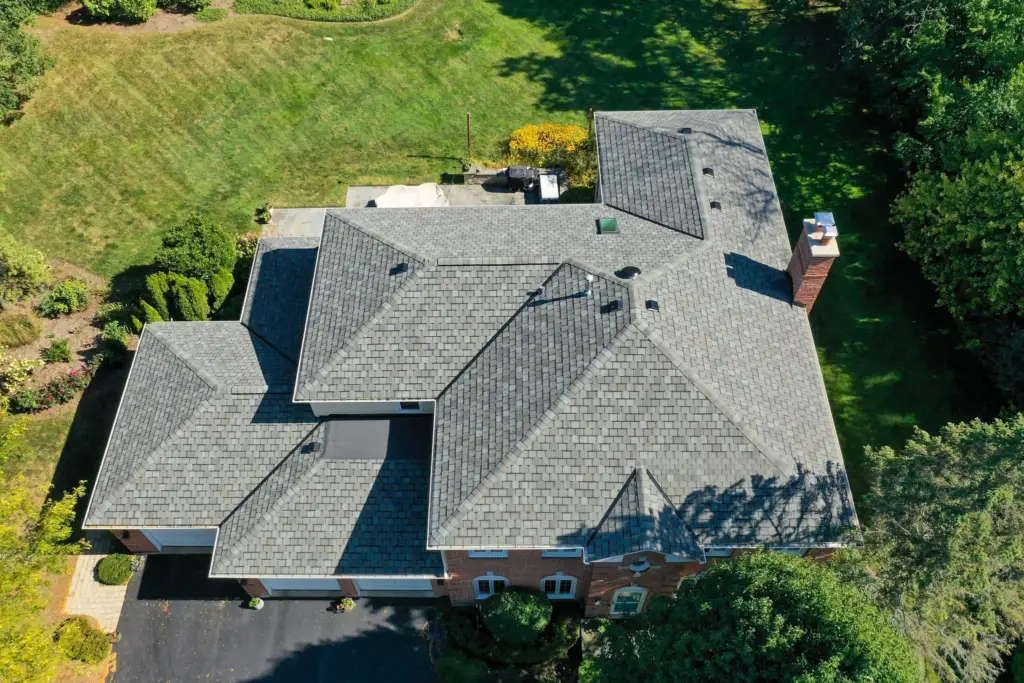
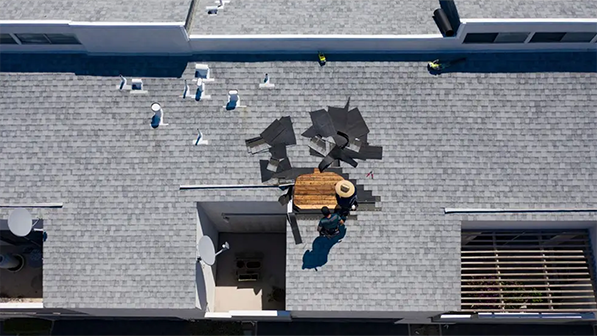
When the damage is isolated to one slope and the rest of the roof is sound, a targeted repair is the honest answer. We stop the leak, replace what failed, and leave the good shingles alone.
Best when:
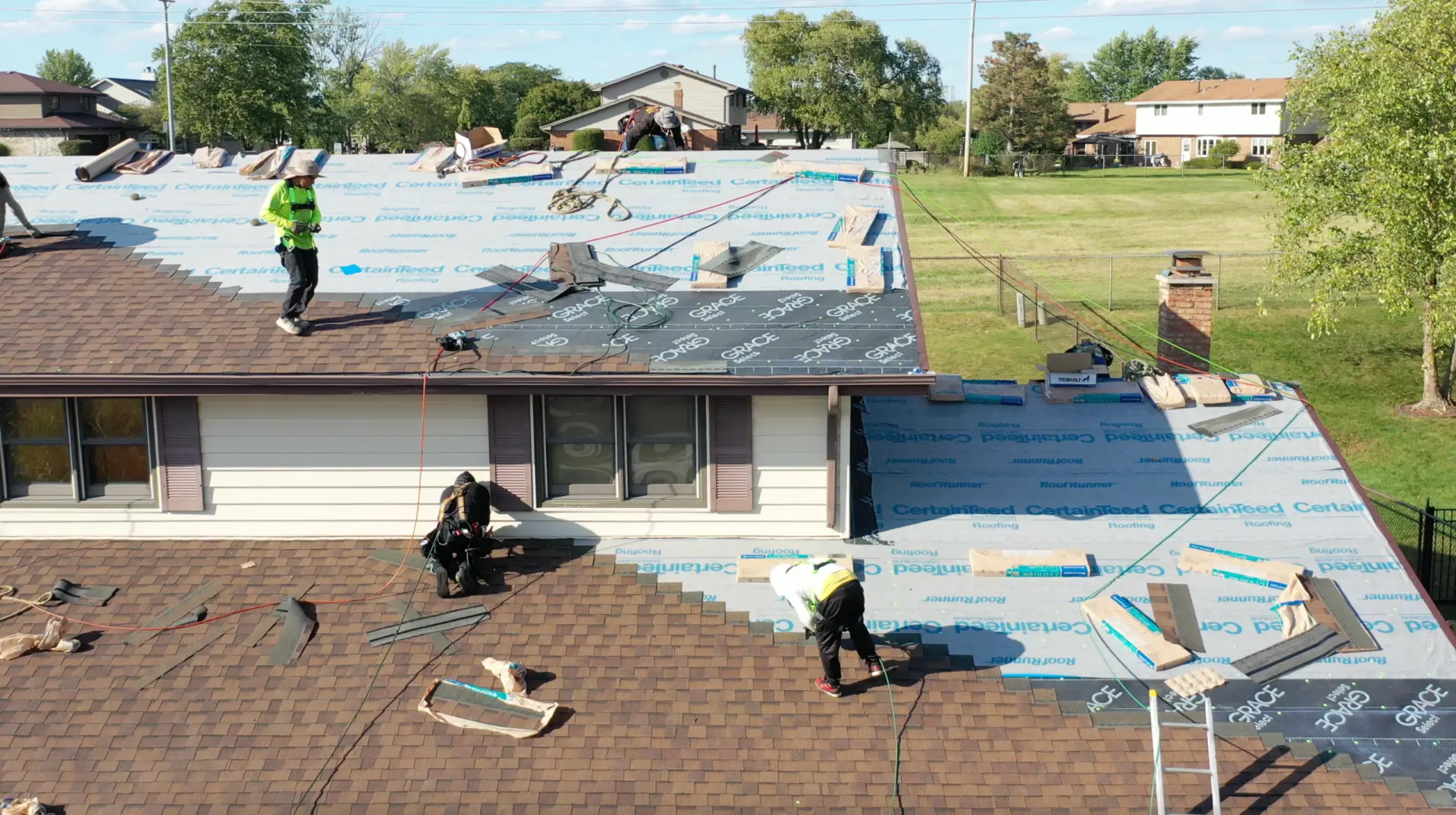
Past 15 to 20 years, or with damage spread across several slopes, a full tear-off usually costs less over time than a repair that buys you two more winters.
Replacement includes:
Hail and wind damage is often covered, and clear documentation before the adjuster visits helps make sure it is seen. We inspect, photograph, and write the report, then can meet your adjuster on the roof.
What we handle:
From the North Shore to the Southwest Suburbs, we have completed thousands of roofing and siding projects for homeowners throughout the Chicago area. If you live nearby, there’s a good chance we’ve already worked on a home in your neighborhood.

Horizon restoration did a great job in getting our roof claim approved by our insurance. They worked hard to make sure the insurance company covered the cost of the roof and gutters. AJ was always on top of things and kept us informed every step of the way. We recommended them to our family member who also signed with AJ and Horizon Restoration due to how well they managed our project. We would highly recommend them for their roofing expertise, knowledge with insurance companies and over all communication during the project. In addition to this the roof looks great and their team did a great job on the roof and the clean up.

Overall great experience! Julius was fantastic to work with. He was very attentive to all the details and always there to answer questions and get the job done right. Whenever he said he would take care of something, he took care of it. The crew did a fantastic job and the workmanship was top notch. I can not believe how quickly they did a full replacement of our sheathing and roof shingles and still did a high quality job. They left the worksite spotlessly clean. We are getting lots of compliments from our neighbors on how good our roof looks. If you want your roof done right, go with this company.

Paul, thank you so much to you and your entire team for our beautiful new roof. We couldn't have made a better choice. Thank you for all your help with the insurance paperwork and for making the whole process so smooth. We highly recommend Chicago Horizon Restoration Roofing Company to anyone looking for quality work and outstanding service! Pamela & Steve

Horizon Restoration did an amazing job on my roof! Paul was fantastic to work with. Super responsive, most important he was honest and really cared about making sure everything was done right. He made what could have been a stressful process feel easy. The crew was fast, clean and very professional. I’m really happy with the result and would definitely recommend them.

Our contact at Horizon Restoration was Art. He worked with our insurance company for over a year and a half to have our roof and siding replaced. The other persons behind the scenes at the office who were instrumental in assisting Art were Paul-Manager, Ruby-who was in charge of all correspondence, Jack-Install Manager who coordinated the crews for both the siding and roof, Claudio-On Site Roofing Manager and Mike-On Site Siding Manager. They worked seamlessly as a team and were always available when we had any questions or concerns. It is so nice to have Horizon Restoration going to bat for us. Especially Art whose experience and knowledge was so key in getting our insurance company to approve the replacement of our roof and siding. Our roof and siding look so nice we highly recommend Art and Horizon Restoration to anyone in need of their services. Thank you Art and Horizon for everything.
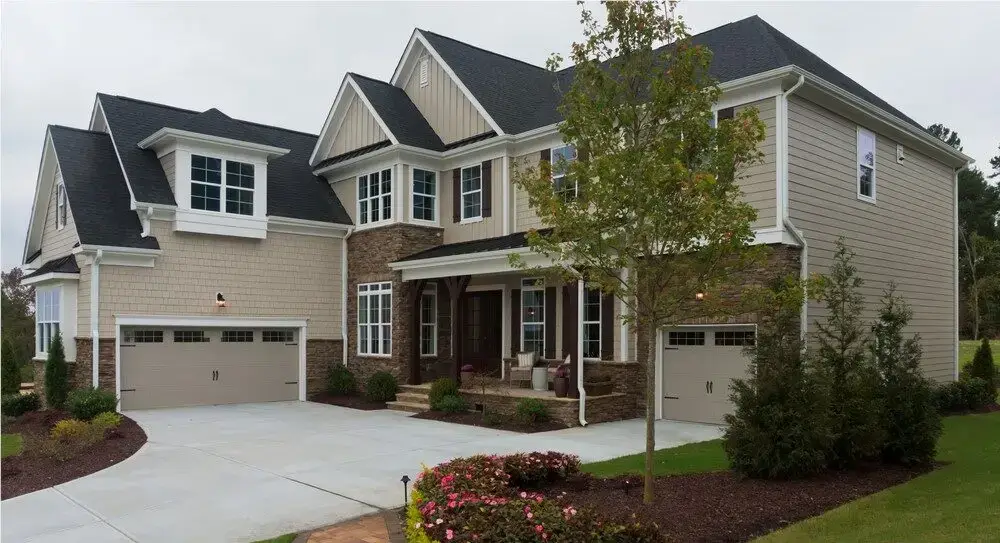
Six more exterior services, one local team and one number to call.
Common questions about asphalt shingle roofing in Chicago.
You should schedule a roof inspection within a few days of any hail or wind event. Storm damage on asphalt shingles, especially on darker colors, does not always show up right away, and waiting too long can also cause problems with your insurance claim timeline. A free inspection lets us document granule loss, cracked shingles, or soft spots before they turn into leaks. If a storm just rolled through Naperville or Arlington Heights, getting on the schedule quickly helps document the damage while it is fresh.
Most asphalt shingle roofs in our area are built to last 20 to 25 years, but sun, wind, and Chicago freeze-thaw winters wear them down faster than people expect. Curling shingles, bald spots, and granules piling up in the gutters are the clearest signs a roof has aged out of repair. Past 15 to 20 years, or with damage spread across several slopes, a full roof replacement usually costs less over time than a repair that buys you two more winters.
Hail bruising is one of the most common issues we see in suburbs like Naperville and Arlington Heights. These areas go through severe hail cycles most summers, and the damage often hides on darker shingles where bruising does not show right away. Homeowners also deal with granule loss on older, lighter-weight shingles from subdivisions built in the 1990s. Left unchecked, both problems lead to leaks and shortened roof life, so a yearly check after storm season is a smart habit.
Often, yes. A targeted repair usually holds when the damage is limited to one slope, the surrounding shingles still lie flat with their granules intact, the decking underneath is solid, and the roof is under about 12 to 15 years old with no prior storm claims. If a repair is enough, we will tell you so, even though it is a smaller job for us. See our roof repair page.
It depends on the product and on how exposed your home is: ratings vary by manufacturer and product line, and two homes twenty miles apart can need two different shingles. Ask any contractor for the wind rating in writing. Installation matters as much as the rating: a good sealant strip keeps shingles bonded between gusts, and nail placement and count matter in exposed areas, where four nails per shingle is not always enough.
Shingle manufacturers make their strongest warranty options available through contractors they have trained and credentialed. Horizon Restoration is a CertainTeed ShingleMaster™ PREMIER contractor and an Owens Corning Preferred Contractor, and we install to manufacturer standards, which is what keeps your warranty intact. We are also licensed, bonded and insured in Illinois.